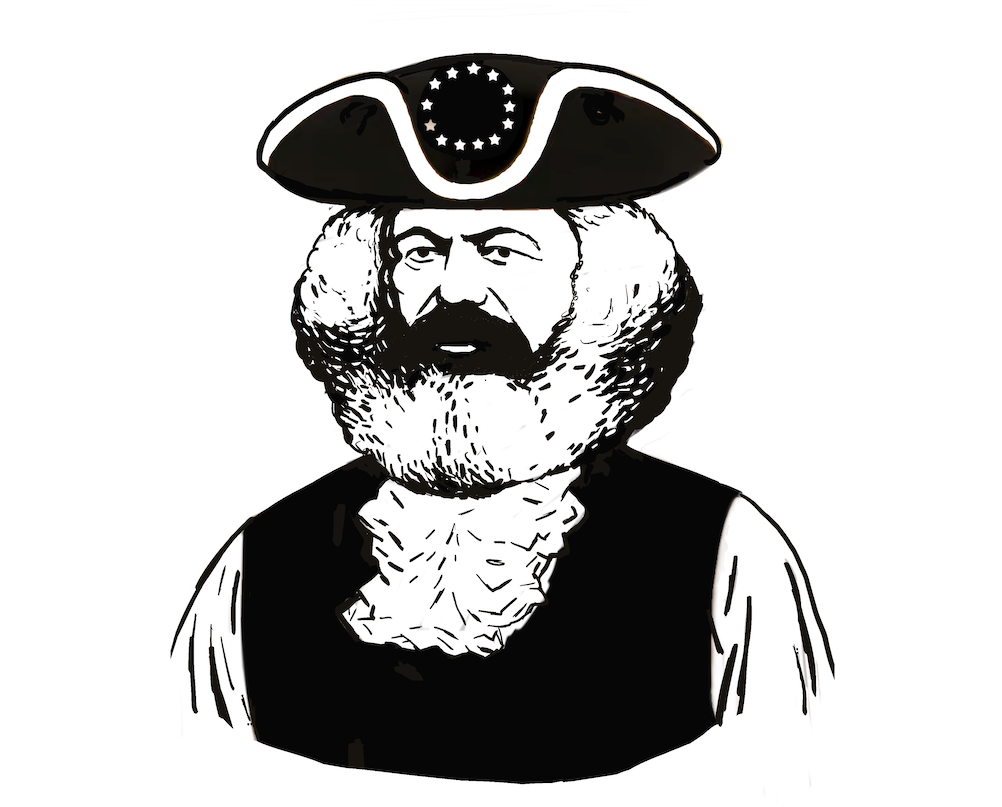
Anti-imperialism and the “Left” today

Chris Cutrone

Presented at a panel discussion hosted by the Platypus Affiliated Society at the University of California Santa Cruz, with fellow speakers, Keith McHenry (Food Not Bombs) and Alex, March 12, 2026.

Platypus’s first public forum event was a panel discussion on imperialism, held in early 2007 at the School of the Art Institute of Chicago, where my students had initiated the reading group that became Platypus in the context of the Iraq anti-war movement. We asked the questions, “What is imperialism? And why should we be against it?” It was the first of Platypus’s panels discussing the historical death of the Marxist socialist Left and its potential rebirth.

I spoke on this public forum panel, and laid out the ideologically tendentious perspectives of “anti-imperialism” that were a problematic legacy of the 1960s New Left Vietnam anti-war movement, impeding the possibility of the reemergence of a socialist movement and politics.

An obscure fact of the “Marxist Left” of the era is that the Vietnam War took place in the context of the Sino-Soviet split: the conflict between the USSR and Communist China, which President Nixon eventually exploited to withdraw from the war in Southeast Asia. Several years later, China and Vietnam fought a brief war but violent war with tens of thousands of casualties — for the Chinese, it was to fight against supposed “Soviet imperialism” of which Vietnam was an ally.  Why? Because Vietnam had invaded Kampuchea — Communist Cambodia — and deposed the Khmer Rouge, to stop the “killing fields” there in which millions perished. Kampuchea was a Chinese ally — which at that time meant an ally of the U.S. in their joint opposition to the Soviet Union and its Eastern European Warsaw Pact countries; so the USSR and its allies could plausibly claim that Communist China was acting on behalf of “U.S. imperialism.”

The “Left” of the time claimed that after the Vietnam War and in the context of the 1970s global economic downturn, the U.S. was in decline and inter-imperialist competition was breaking out with Japan and Germany and greater Europe. — Instead, the U.S. led the global restructuring of capitalism into neoliberalism, which eventually brought down Communist Party rule in the East Bloc and the Soviet Union itself — all according to the long-term Nixon and Kissinger plan to open up China to capitalism and set the stage for renewed American hegemony in the 21st century, which it certainly did.

There are two opposed views of “imperialism” operating on the “Left” today. One is concerned with “U.S. imperialism” as the global hegemon enforcing world capitalism; the other is welcoming “multi-polarity” and the rise of “counter-hegemons” such as Russia and above all China — less so, the other BRICS countries, whose time seems to have passed.

There are some deliberate conflations and confusions of these matters, One older way of discussing such things was in terms of the Global South — by contrast, the Global North once included the Soviet Union and was concerned with “Soviet imperialism,” and had a decided “Third Worldist” orientation. Where does Russia fit into such a schema today? “Imperialist” or “Global South”? Is China as a share of the global economy nearly equal to its share of world population, still a peripheral, developing or under-developed country, or now a core country in global capitalism? Is Chinese economic and industrial development abroad, for instance in Africa, “imperialist” expansion or neo-colonialism? When Russian troops are stationed in other countries in support of allied regimes, does this turn those countries into Russian colonies?

I will cite Frankfurt School Critical Theorist Theodor Adorno, who called anti-Americanism in the Vietnam War era “ideological.” Meaning, a form of misrecognition, something that conceals more than it reveals. This is true today — perhaps even more so than back then. On the American “Left,” anti-Americanism has the quality of inverted nationalism, suggesting that only American actions matter in world events.

This confusion has long historical roots, going back to the era of original historical Marxism at the turn of the 20th century.

The Communist Party of Great Britain’s writer for the Weekly Worker, Mike Macnair has claimed that the fundamental mistake made by Karl Kautsky, Vladimir Lenin, Rosa Luxemburg, and other Marxists of the Second or Socialist International, was that they misapprehended the end of the British Empire’s global capitalist hegemony with the end of capitalism itself. For instance, Lenin called the “imperialist” era of the time the “highest (possible) stage of capitalism.” This was counter-posed to Kautsky’s revisionist prognosis of “ultra-imperialism” as a possible alternative to WWI’s inter-imperialist competition and conflict: the joint cooperative exploitation of the world by the core capitalist countries. Lenin claimed that this fudged the issue and tried to avoid, not the inevitability of international war in imperialism, but rather the political crisis of capitalism that led to fierce political conflicts both within and among nation-states.

But the end of the British global hegemony should have led to proletarian socialist revolution and the transition out of capitalism. It is a tragedy that it wasn’t made into that. Indeed, we are living in the aftermath of that failure. The U.S. shouldn’t have replaced the British as the global hegemon, since it created a crisis of the American republic itself, which we are still dealing with today.

For Lenin, imperialism was a crisis of the politics of the state. There was already liberal and conservative anti-imperialisms manifesting in the late 19th and early 20th centuries, for instance by the American Anti-Imperialist League in the Spanish-American War, which signaled the entrance of the United States as an imperialist power on the stage of world history. The election of 1900 in the war’s wake was defined by the contention between the anti-imperialist and former Populist Democratic Party Presidential candidate William Jennings Bryan, and Republican William McKinley who had prosecuted the war resulting in the U.S. acquisition of Puerto Rico and the Philippines and capitalist penetration of Cuba, running for reelection, with new Vice Presidential candidate Theodore Roosevelt. Bryan lost and McKinley was soon assassinated by an immigrant anarchist in protest of the U.S. occupation of and counterinsurgency against independence fighters in the Philippines, bringing Roosevelt to power.

The Social Democratic Party candidate for President and former Democrat and Populist Eugene Debs distinguished the proletarian socialist approach to the problem of capitalist imperialism from the Republican progressive and Democrat conservative responses, expressing his Marxist understanding of the historical significance of the problem. Debs emphasized that the Anti-Imperialist League’s preferred candidate, William Jennings Bryan and the Democratic Party more generally expressed the conservative reaction against capitalism in the “wail and cry of the dying middle class,” whereas the Republicans, who were the dominant party since the Civil War and, until FDR’s electoral realignment of the capitalist Parties a generation later in 1932, represented capitalist “prosperity galore, give us four years more!” If the Republicans were the “imperialist party” and the Democrats the “anti-imperialists,” then the socialists were neither: they represented “industrial democracy” and overcoming capitalism itself — including of course the “imperialist” forms it took.  

Imperialism was both a political and economic phenomenon, in the Marxist view. It was both an economic and political crisis in a historically advanced stage of capitalism. Hence both “progressive” and conservative capitalist politicians inevitably oriented around it, in an antinomical conflict that expressed the historical contradiction of capitalism itself. What were the symptoms of this crisis? Monopoly and finance capital; and the Bonapartist capitalist state — in the U.S. referred to as the “imperial Presidency.” This is not a form of capitalism, but a form of the crisis of capitalism. Is it still so today?

The crisis of capitalism manifested in the inter-imperialist conflict of the Great Powers leading to WWI was a political conflict, which is what made it an opportunity, a possibility and necessity of proletarian socialist revolution, to turn the imperialist war into a class — civil — war. But it was already a civil war among the capitalists. The Great Powers were part of the British-led global capitalist system. It was not a matter of national capitalist states — capitalism, from a Marxist perspective, was never a national proposition of separate individual countries, but always a world-historical one. It’s one world-historical crisis.

The question for Marxists was how to struggle for proletarian socialism in the context of the breakup of empires, with nationalist uprisings and conflicts. This was a subsidiary problem of the defining issue for Marxism, namely the relation between democratic and socialist revolution, going back to 1848: how was the proletariat to lead the democratic revolution in the era of capitalism so that it led to socialism? How not to be swamped by petit bourgeois democracy and liberal — including national liberal — radicalism and the limits of bourgeois revolution? How to ensure the independent initiative and leadership of the working class in the revolution, rather than subordination to the liberals and other bourgeois radical democrats, progressive or otherwise?

This is only a distant memory in light of today’s realities. It is a stretch, to say the least, to try to apply the political manifestations of Lenin’s time to the politics and supposed “geopolitical” conflicts of our time. Unlike Lenin’s time of the crisis of the British Empire and global hegemony , the political system of Pax Britannica in the emergence of industrial capitalism of the 19th century, this is not the end of the American empire or of U.S. global hegemony, but an opportunity and necessity of its renewal, within a broader revolution of capitalism, as happens every 40 or 50 years, economically and politically.

Trump represents the crisis of neoliberal politics in both the Democratic and Republican Parties — a crisis of electoral appeal, policy agenda and ideological justification after those of neoliberalism have worn off. It is also a crisis of post-neoconservatism and its policies and ideology. But we must ask the reasons for that ideology: the task of the 21st century as a second American Century. For it is not only Americans who might want it or not, but the world that might still need or even want American leadership and a global role for the U.S., both economically and politically. The entire world depends on the U.S. — Interestingly, the U.S. already depends far less on international trade than other countries — even less than China does.

Marxists of Lenin’s time were wary of ideological anti-British-ism as an excuse for politically reactionary and no less capitalist phenomena such as German “Great Power” aspirations. Marxists were not sympathetic to the rising capitalist powers against the ruling one. Today, this is complicated by China’s ideological claim to “Communist” politics. Is China a rising capitalist power against the U.S. or a force for socialism? What if it’s neither? Certainly Russia is neither. The military conflicts of our time are in the Middle East and Central Asia, for instance not only Iran and Israel but Pakistan, India and China: where should socialists “side,” if at all, in such wars, potential and actual? Where does the U.S. stand in relation to them? How, if at all, should American socialists be oriented to the political problem of “imperialist” capitalism today, looking ahead to the struggle for proletarian socialism? How does imperialism and its conflicts point beyond capitalism, if at all?

The current war in the Middle East is misleading as an indicator of the future: it is more an expression of the unfinished business of the past, putting an end to long-simmering  conflicts without a future, as countries such Saudi Arabia and the Gulf States and Turkey want to move on. So do the people of Iran. Islamist ideology is a thing of the past.

Anti-Americanism is a Cold War relic of an ideology — already old in the 1980s when the Islamic Republic originated. It is weak and lame. It expresses a lack of imagination on the “Left.” But it is not true to original historical Marxism such as Lenin’s. It is an inverted American nationalism, especially among Americans. It is an apologia for non-American capitalism, such as that of the Europeans and Asians, but also Latin American, Middle Eastern and African capitalism.

Socialists today should be faced to the future, warned but not beholden to the historical phenomena and oppositions within capitalism of the past — history serving as a critical and not dogmatic resource for thinking about our possibilities and tasks today. “Imperialism” is a term from a bygone era that reminds us not of eternal realities but of our own failure to rise to the necessities of our time. Workers in the U.S., Asia and China, the Middle East and Europe, Africa and Latin America are jointly exploited and oppressed by capitalism, and so must struggle together to overcome it. Socialists in America should accept the responsibility of the central, leading capitalist country appropriate to this task. | P

Chris Cutrone

Chris Cutrone is a college educator, writer, and media artist, committed to critical thinking and artistic practice and the politics of social emancipation. ( . . . )

Articles by month

Article dates

March 2026
S M T W T F S
1234567
891011121314
15161718192021
22232425262728
293031  

Chris Cutrone with Doug Lain on the Iran war

Chris Cutrone discusses with Doug Lain the Iran war. In the second half, they discuss pedagogy vs. punditry, writing vs. podcasting and other issues of public intellectual life. 

Why Marxists loved America (Chase Center at OSU)

Chris Cutrone

Presented at the Salmon P. Chase Center of Ohio State University in Columbus, Ohio, February 11, 2026.

Hegel made an exception to his philosophy of history for America as a “land of the future.” He acknowledged to a friend that his model political regime of constitutional monarchy on the basis of the English Revolution was improved in the American Constitutional Republic as the ideal form of state for bourgeois civil society, with its elected monarchy in the Presidency as counterbalance to democracy, to preserve the freedom of civil society. Marx and Engels regarded the United States as the most bourgeois, democratic and free country of their time. Lenin called the American Revolution a “truly revolutionary war” and wrote in the early 20th century that in America “freedom was most complete.”

For their part, Marxist-informed socialists in the United States such as the Socialist Party leader Eugene Debs claimed both the American Revolution and the Civil War and their political leaders as historical figures, such as Thomas Jefferson and Abraham Lincoln, to their cause and as their rightful legacy, as against the capitalist political parties, the Republicans and Democrats, falsely wearing their mantles. Russian revolutionary Vladimir Lenin greatly esteemed Debs, especially for his denunciation of U.S. imperialism and its involvement in World War I which had landed Debs in jail, and Debs returned the praise, calling himself, during the counterrevolutionary reactionary panic after the Russian Revolution and Woodrow Wilson’s Palmer Raids repression of the Socialist Party, “from head to foot a Bolshevik and proud of it.”

Later, Frankfurt School Critical Theorist Theodor Adorno, who fled the Nazis to the United States, along with his colleagues Max Horkheimer and Herbert Marcuse, wrote endearingly about his experience of American society, and upheld the American Republic’s Constitutional separation of powers and checks and balances as the model for “critique,” the free interplay of theory and practice and subject and object, in maintaining and promoting the freedom of society.

So powerful was the influence of the American Revolution that the Communist Party in the United States named its party night school for workers after Thomas Jefferson. Its leader in the 1930s, Earl Browder, famously stated that “communism is as American as apple pie.”

What was the substance of this evaluation by such prominent Marxists of the United States and the American Revolution and its legacy? Marxism understood capitalism as a phenomenon based on bourgeois society, and regarded the American Revolution as a “bourgeois” revolution. What did this mean?

First, we must step back and examine the Marxist understanding of history and how it had led to capitalism. The basic idea is that the rise of modern “bourgeois” society or “civil society” was a societal transformation on the same order of magnitude as the Neolithic Agricultural Revolution, which in Marxist terms had ushered in “class society” from the original “primitive communism” of Paleolithic hunter-gatherer communities. This was understood as the beginnings of capitalism. The Industrial Revolution was regarded as the crisis of bourgeois society and capitalism, indicated by the class division into capitalists and workers, specifically by the proletarianization of labor, in which workers no longer owned the means of production — the machines and other capital goods owned by the capitalist class. The Industrial Revolution, according to Marxism, led to the possibility and necessity of socialism — modern communism. The Industrial Revolution historically brought about the modern class struggle of the workers against the capitalists that led to socialism.

Capitalism was defined by its contradiction and crisis: the contradiction of bourgeois social relations and industrial forces of production; and the crisis of “socialism or barbarism” — capitalism was understood as the barbarization and decadence of bourgeois society, in which bourgeois principles were observed only in form and not in substance.

It is important to note that for Marxism bourgeois social relations were the social relations of labor, and bourgeois society itself was understood as the emancipation of labor from the traditional social relations of prior civilization, with its caste system, subsistence agriculture and guild-craft control of artisan production.

The bourgeois revolution was the emancipation of the rights of labor against its traditional restrictions in the previous state — the ancien régime and its official religious sanctification. In this respect, it was the rights of private production and appropriation in civil society, which was the right of individuals to pursue their own chosen labor, offering its products on the free market. But this was a social form of labor: the social relations of free exchange, trade and commerce as the form of social cooperation and community; the freely associated laborers. Trade in traditional civilization was restricted politically by the caste order, and was primarily in luxury or specialized goods for the ruling castes, and not the subsistence needs for the vast majority of people. The rise of bourgeois society was the transformation of immediate local subsistence production into production for trade and commerce. One produces not for one’s own subsistence or those of one’s immediate local community, but for trade to acquire subsistence goods for one’s own consumption from more distant others: the dependence of the majority on the commerce in subsistence goods. The exchange of traditional civilization governed by custom was replaced by trade according to worth freely negotiated according to the value of labor in the market.

This is why the modern society of production for trade and commerce is called “bourgeois,” meaning “urban” in French, by contrast with traditional civilization of the countryside where production was for subsistence in local agriculture — 95% of the population were peasants; today, by contrast the vast majority of society’s members are workers: wage-laborers. Indeed, as Hannah Arendt put it, today even a king is someone employed in a job, not by Divine status but performance evaluation of function: the 17th century English Revolution reduced the Sovereign to the highest paid employee serving ceremonially to perform the dignity of the state.

Capitalism, arising as such in the 19th century, was the contradiction and crisis of bourgeois society in the Industrial Revolution, in which a dynamic of replacing labor by automation introduced the business cycle of boom and bust, which was not merely a commercial crisis of supply and demand in market adjustments, but a crisis of value of wage-labor in the social system of production, indicating its potential obsolescence.

The First Industrial Revolution is conventionally dated from ~1750 to ~1850 and was centered first in Britain and then, after the French Revolution, in France and the Benelux countries — Belgium, the Netherlands and Luxemburg — and those parts of Europe, such as the western part of Germany in the Rhineland, most affected by the French Revolution. (Marx and Engels hailed from this region, Engels from a factory-owning family.) This was where machine automation first took hold and the proletarianization of labor first took place.

The French Revolution was closely associated with the American Revolution, which itself was a further development of the English Revolution of the preceding century. The French Enlightenment and the revolutionaries it inspired were noted Anglophiles, and it was not mere coincidence that the storming of the Bastille took place in the centenary year of the seating of the constitutional monarch in the English Glorious Revolution, 1689, as politically theorized by John Locke. Marx said that of the two traditions of materialism, those of Descartes and Locke, it was Locke’s that led to socialism. Thomas Jefferson participated in both the American and French Revolutions, co-writing the American Declaration of Independence as well as the French Declaration of the Rights of Human Being and Citizen, co-written by Lafayette who himself had led the French forces in the American Revolutionary War. The later leading French Utopian Socialist Saint-Simon served as a soldier in the Revolutionary War under Lafayette, and wrote of the indelible experience of freedom he had in America. The American Revolution is best understood as the continuation and radicalization of the English Revolution, as expressed by Benjamin Franklin and Jefferson’s revising of Locke’s inalienable rights of “life, liberty and property” to the “pursuit of happiness,” of which property was the mere means and not a right as an end in itself. This prepared the United States for the social freedom that made it Hegel’s “land of the future,” to be realized in the 19th century, contemporaneous with the rise of Marxism.

British Utopian Socialist Robert Owen presented his model community ideas to the U.S. Congress, meeting with Founding Fathers and former Presidents John Adams and Thomas Jefferson, and also James Madison, as a keenly interested audience. One of the final expressions of Jefferson’s political sentiments was to endorse, in an 1825 letter to Frances Wright, the Utopian Socialist experiments underway as a means for facilitating Emancipation and Abolition as part of the greater cause of labor.

The Second Industrial Revolution is conventionally dated from 1871 to 1914 — from the Franco-Prussian War to WWI. German victory over France led to unification under the Prussian Empire, which allowed for its rapid industrialization. Contemporaneously, the Meiji Restoration in Japan and political centralization under the Emperor, triumphant over the Samurai, and the victory of the Union in the American Civil War and the abolition of slavery, as well as the emancipation of the serfs in the Russian Empire, meant that these countries saw rapid industrialization in this period. The rise of these new industrial powers produced new international conflicts in global capitalism and eventually the World Wars of the 20th century.

Whereas Marx and Engels were individuals in a “party of two” whose ideas about capitalism and socialism were relatively limited in their influence, in the era of the Second Industrial Revolution there was the emergence of Marxism as a predominant ideology in the modern proletarian socialist movement of the working class. The new socialist parties most influenced by Marxism in the era prior to WWI were those in Germany, the United States, Russia, Italy and Japan: the countries of the Second as opposed to the First Industrial Revolution. Unlike the others, the United States was a liberal democratic constitutional republic. It was also quickly emerging as by far the largest and most dynamic and technically innovative capitalist economy in the world. The Marxists of the Second International such as Lenin and Eugene Debs understood that the future of socialism at a world scale would be ultimately decided in America.

Furthermore, in this period, the working class was greatly internationalized, with many workers migrating for work around the world, often not permanently settling but returning to their home countries after earning their fortunes. It was a smaller world at that time of original historical Marxism than we tend to appreciate. Many workers from around the world had experience living and working in the United States in this period, and they were influenced profoundly by its social freedom — much as Marx and Engels had been influenced by the freedom they experienced as exiles in France and England. Interestingly, Marx seriously considered permanently relocating to America, to which many radical political refugees from Europe had emigrated in the 19th century, such as the “Red ’48-ers” who had fled from the failed 1848 Revolution in Germany and Central Europe — “Bohemians.” These German émigrés, with whom Marx was associated, participated in the Abolitionist Movement and the new Republican Party in the United States, whose leading newspaper, the New York Tribune, Marx regularly wrote for in the 1850s, and the Red ’48-ers served as officers in the Union Army during the Civil War and figured as Radical Republicans during Reconstruction. Later, in the period before the Russian Revolution, many leading and rank-and-file Bolsheviks lived and worked and organized as socialists in the United States. They took that American experience back with them in leading the Revolution in Russia. Many American socialists inspired by the Russian Revolution had first met the Bolsheviks in America.

As elsewhere, the contradiction between bourgeois society and its values of the rights and freedom of labor with new industrial capitalism was clearly manifest. This introduced a complex dynamic in which the struggle for socialism of the industrial proletariat was connected with upholding the older revolutionary tradition of the American and French Revolutions and the bourgeois rights enshrined therein. Just as French socialism emerged from the revolutionary tradition there, so did socialism in the United States, through both the American Revolution and the Civil War.

In Germany, the preeminent country of the Marxist-led socialist movement at the turn of the 20th century, the working class claimed the legacy of German Idealist philosophy of Kant and Hegel, which was itself inspired by the English, American and French Revolutions, as against the capitalists: the working class claimed the intellectual and cultural heritage of the bourgeois revolution that had decayed — become “decadent” — under capitalism. This was also true in England, France and America. In this way, the struggle for proletarian socialism took up the mantle of the earlier bourgeois revolution and emancipation that had been betrayed in capitalism.

So, it is not a simple matter of proletarian socialism succeeding the bourgeois revolution in terms of leaving it behind, but of actively recovering it, struggling within the revolutionary tradition from its contradiction in capitalism. Propagandistically, this was posed as the succession of the bourgeoisie by the proletariat as the historically revolutionary — and “universal” — class. What did this express?

The universality of the bourgeois revolution suffered some severe setbacks outside the United States in the 19th and 20th centuries, as well as at home with the reinvigoration of slavery as a function of the Industrial Revolution, preventing it from dying out naturally as the Founding Fathers expected. Whereas there has been one continuous American Republic from the Revolution to today — however modified substantially by the Civil War and Reconstruction Amendments — France, for example, is today in its Fifth Republic, interrupted by two monarchies, two empires and a fascist regime; and the U.K. remains a monarchy, albeit constitutional (even though it was a republic during its revolutionary Civil War in the 17th century); and Germany and Japan have been liberal democracies only since WWII. And the U.S. remains the preeminent capitalist country in the world that it became during the Second Industrial Revolution.

The modern bourgeois republic differs from the ancient republic in its respect for civil liberties and rights — the rights of civil society against the state, not observed by Ancient democracy.

The Marxist understanding of the dialectical relation between capitalism and the possibility and task of socialism means that the contradiction of bourgeois social relations and industrial forces of production poses itself most purely in the United States of America, and has done so from early on. It has not been clouded by the question raised by Arno Mayer and others about just how “bourgeois” society and politics were in Europe before recent times, the supposed issue of “feudal holdovers” in Europe, even in France as well as in the U.K. up through the Second World War — before the victorious U.S. imposed the essential criteria of the American republican system of liberal democracy onto Europe and Japan. This was not merely a function of capitalism, since capitalism has been compatible with illiberal and undemocratic political systems. The tension between capitalism and the freedom of American bourgeois society was made global in character in the “American Century” and leadership of the “Free World.” This was the intention of Woodrow Wilson’s League of Nations and realized in the United Nations system of the victorious Allies under American leadership — the Cold War erupting soon between them notwithstanding.

Just as in Marx’s and Lenin’s times, the specter of socialism or communism apparently still haunts the world, as seen in the last Millennial generation’s attempted resuscitation of its tradition. Today, it appears as the ghost of Marxism. The greatest phenomenon of a new socialist movement in recent times has taken place in the United States with the Millennial Left. In it, questions of original historical Marxism — the recovery of Marx and figures such as Lenin — have figured prominently. This was also true in the last major historical upsurge of interest in Marxism, in the 1960s New Left, which back then — as now — was influential and inspirational throughout the world. It was long understood that if Marxism is not relevant in the United States, then it is irrelevant everywhere else.

Late doubts about this speculative proposition of identical fates of the bourgeois revolution — and America as its last standing avatar — with the struggle for socialism to overcome capitalism reflect not enlightenment but its forgetting. Socialist counter-identification with America as the predominant capitalist country expresses doubts about socialism. Marx’s and historical Marxism’s clear perspectives on the foundational character of the American Revolution and central character of the United States historically in the struggle for socialism have become obscured in the present. A reactionary anti-capitalism, both on the ostensible “Left” and avowed Right, has made a casualty of America and its revolutionary history. In its 250th year this is particularly poignant. In the recent era of neoliberalism — the Reagan and Thatcher revolution of neoliberal capitalism — the American “Left” has reached to post-WWII European social democracy as a contrasting counter-model, and capitalism has been hastily identified with Anglo-Americanism. In this, both the counterrevolutionary character of social democracy and the revolutionary character of capitalism itself have been obscured. What was forgotten is that original historical Marxism opposed the welfare state of capitalism, which was seen rightly as — intentionally — undercutting the workers’ own social capacities and struggles by making them dependent wards of capitalist politics. Instead, this counterfeiting of socialism has been accepted falsely as good coin. The Millennial “Left,” for instance the Democratic Socialists of America, has been content to accept what the Right denounces demagogically as “socialism” in the welfare state, and inverting its value positively as their own program. The original meaning of not only Marxism but socialism itself as the promised self-overcoming and transcendence of capitalism has been deranged beyond recognition. — Worse still, “freedom” has become a strangely tabooed concept, both on the “Left” and beyond. Pessimism about America expresses pessimism about socialism. It is pessimism about freedom. Choosing the pessimistic version of capitalism in “progressive” welfarism has meant doubting the possibility of socialism that Marxism originally recognized in capitalism as a self-contradictory form of freedom.

The crossroads of “socialism or barbarism” has cut through the heart of America as the preeminent capitalist country for the last two centuries. It still does. Hence, so does Marxism, indelibly. As we remember the American Revolution and its historical legacy, we are haunted by the remaining task of socialism — to realize the historic promise of freedom as the dialectical truth of capitalism. The truly emancipatory character of the American Revolution lives, however contradictorily, in capitalism, and its fate will be determined in the struggle for socialism. | §

Chris Cutrone with Doug Lain on philosophy and Marxism and U.S. National Security Strategy

Chris Cutrone discusses with Doug Lain his article, “Objectivation of Spirit” published in Sublation Magazine, further response in summation to Benjamin Studebaker on Marxism and philosophy. In the second half, they discuss the new Trump Administration National Security Strategy published in November 2025.

https://www.sublationmag.com/post/objectivation-of-spirit

Objectivation of Spirit

Chris Cutrone

“The history of philosophy has meaning only insofar as we know the determinations of thinking within their own internal development. The later philosophies contain the principles of earlier ones, but are more concrete over against them. So our own philosophy [absolute idealism] necessarily is also the richest, the most concrete, since it is the result of the work of millennia. Everything is contained in this result. 

“The Eleatic, Platonic, Aristotelian, and other such philosophies cannot be the philosophy of our own time. Our principles are of necessity more concrete than theirs, which arose when spirit still stood at a lower level of development.”

— Hegel, Lectures on Logic

Teaching

When I teach Marxism, I immediately distinguish the Socratic — Platonic — dialectic from the Rousseauian — bourgeois — dialectic of Kant, Hegel and Marx.[1] What makes them different? One way is that the former is a dialectic of thinking, presented as dialogue, arguing from opposite positions, and moving from error to truth; whereas the latter is an open-ended transformation of truth through successive overcoming of prior truths, and is in and of reality itself. But what reality? Social reality — social relations. Social relations were not always dialectical but they are in bourgeois society — in capitalism. There is a difference between a dialectic of philosophy and that of society.

But this is not in the way “Marxists” conventionally explain it, via Parmenides vs. Heraclitus, endless change, etc. “Marxists” are content to adopt a position in Ancient philosophical disputes and assert traditional ontological claims, i.e. “materialism” vs. “idealism.” But Kant and Hegel already transcended such antinomies. Plato is not already Hegel. (Let alone Marx.)

Cards on the table: I think of Ancient philosophers as tribal mystics. This is their truth. Theology and philosophy were not so separated — which is why they could cross-fertilize, e.g. Christianity’s regard for Plato and Aristotle as “Christians before Christ.” Or Muslims. When truths or virtues — gods — were eternal, this made sense. But we know differently.[2]

Philosophy

Kant began philosophy and Hegel completed it. Why? Because Kant established that metaphysics — ontology — is a matter not of the world or things in themselves but of the subject: metaphysical concepts and categories refer to our relations, both practical and theoretical. Because our practical relations change, our theoretical concepts change — philosophy changes. And the change is not only in form but substance. It is in our relations themselves. The subject changes, substantially. There was no philosophy in the modern sense yet because there was no subject. We are subjects in ways the Ancients were not. None of them. — As Adorno put it, “Before the formation of the individual in the modern sense,” there were “phases and societies in which there is no freedom[, and hence] are not only not rational but not human,” because there did not yet exist the subject “in the sense meaning not simply the biological human being, but the one constituted as a unit by its own self-reflection, the Hegelian ‘self-consciousness’.” (“Freedom and organized society,” Negative Dialectics, trans E.B. Ashton [Continuum, 1973], 218).

The Ancient definition of philosophy as concerned with the universal freed from all particulars — abstractions freed from the concrete, the noumenal freed from the phenomenal, the ideal freed from the real, the Good apart from all manifest phenomena — is an inherently elite conception, for those who were freed from the need to labor to survive — for those freed from the exigent needs of society and politics expressed by doxa. — Are capitalists today such an elite? Not really. They are manics, no more able to make good use of their leisure than anyone else. In the past, the priesthood and aristocracy also hardly made good on their exemption from labor, since they were consumed with other activities such as warfare and plumbing the depths of resisting temptation — “mortification.”

By contrast, modern philosophy, as articulated explicitly by Kant, was to articulate common sense, and did not consider itself more intelligent than the thinking of the common day-laborer, i.e. anyone and everyone. Philosophy was not apart from or above the community or humanity, but another activity that participated in everyday life: the world had become philosophical and philosophy became worldly in modern life and modern freedom. Freedom was not freedom from work — the freedom of a priestly or warrior caste exempted from subsistence labor — but the opposite: the people contributing and participating in freedom through labor; the social relations of bourgeois society in production and commerce.

Bourgeois society overthrew the old ruling castes in the Revolt of the Third Estate of Commoners: the first and only successful slave revolt in history. Ancient philosophy depended on and ratified slavery: it was the thought of slaveholders. Society was enslaved to the priests and warriors, legitimated by their theology and philosophy. God or the gods created the world as it was; and its rulers embodied the Good of the world. As Nietzsche put it, they defined the Good in terms of themselves. This was the essential Ancient heritage of philosophy. It is a particular Will to Power — that of the philosopher. — And who was the philosopher? That rare species of thoughtful warrior or priest.

Today

But bourgeois society completely overcame and surpassed the power of the Ancients — and the thought that emanated from that power. Ancient conceptions of philosophy itself were about the impossibility of thought — the Divine mystery of Being. Not only is any phenomenon separated fatally from the noumenon, but every concept of the Good is a falsification of it. It is a philosophy of the impossibility of philosophy. Not so for the moderns. The Enlightenment initiated by bourgeois society is about the possibility and necessity of philosophy: an activity of the highest necessity, freedom. It is not about a reverential humility acknowledging the folly of following particular transient phenomena, but the arrogance of “storming Heaven” and taking fire from the gods into our own hands, as an act of freedom. Philosophy was not about the invariant eternal but about what changes — and what changes as a result of our own action. This gives an urgency to social and political action in the present. The false that is overcome is no longer merely the false but the truth that changes. Revolutionary philosophy is about overthrowing existing truths in favor of new ones.

Such change is the expression and result of our freedom — the freedom of transformation in our relations. How does such freedom develop? In and through society, which transcends human beings and their capacities. Human beings have always been as intelligent — or stupid — as they are now. But society has become more intelligent: the original Artificial Intelligence, Rousseau’s “general will.” The subject is not the predicate but the result of freedom: freedom produces us. We are the manifestations of Spirit, parts of the general will and members of society. The objectivations of Spirit are its necessary forms of appearance of the substance of reality and not the inevitable deceptions of a fallen world separated from pure Ideas — separated from God or the Good.

Marxism

The issue of Marxism is not that of a closed dead doctrine vs. an open living tradition, but rather whether and how we still live in Marxism’s time; and whether apparent “developments” of Marxism in the last century have or have not helped us to grasp the problem of capitalism and the prognosis for overcoming it. Marxism was meant to overcome itself — its own necessity. But it was overcome instead by capitalism itself. Yet the problem of capitalism remains. Is there a point to prioritizing and centering original historical Marxism in our considerations of the task of socialism today? That is an open question. I do not assume it — I don’t presume the relevance of Marxism.

Furthermore, as regards how Platypus functions as an educational project, it was never meant to provide a general or basic education: it was never a foundations course — not even for the foundations of Marxism. Is there a point to maintaining the original meaning of historical Marxism, if only to contrast it against and throw a critical light on present “Leftist” thinking and action, allowing us to recognize the latter through a defamiliarization or estrangement-effect? For this is the actual purpose in Platypus conducting such primary internal education in what seems to be Marxist “scripture.” If the rest of the “Marxist Left” reads these texts — specifically, the “canon” of commonly referenced writings rather than the actual best works of Marxism (Lenin wrote far more and better than his Imperialism pamphlet, including on the issue of imperialism itself) — then familiarity with them is important to be able to engage the present “Left” and the problems of its conceptions and assumptions — not to simply share them, but to be able to cast them into critical relief.

There is no living tradition of Marxism — it died a long time ago. So that is simply not an option: there is no tradition to join — not even to resuscitate. At least not a ready-made one. Marxism cannot be reconstituted as a function of reading.

Where to begin one’s education in order to be able to approach Marx and Marxism? Does one begin with Plato and Aristotle? Marx himself was steeped in Classical Antiquity, including writing on the pre-Socratic materialism of Epicurus and Democritus — albeit in light of the controversies within and disintegration of Hegelianism in his own time. Platypus chooses to begin with Rousseau — we choose to begin with society and politics rather than philosophy, and moreover with modern rather than Ancient political thought.

Ancient and modern

This is not because we consider pre-modern thought, whether political or philosophical, to be evil or bad — wrong — but because it is simply inappropriate to the modern capitalist world. The change is important. We have been facing problems in the last couple of centuries not faced by Plato or Aristotle — not addressed in their political writings. Our problems wouldn’t even begin to make sense to them. As the modern poet Paul Valéry observed at the turn of the 20th century, neither space nor time nor matter nor energy are any longer what they were for time immemorial. This of course affects our social and political world. But we are still living very much in the shadow of problems raised by Rousseau, which subsumed those of Hobbes and Locke, who are hence less controversial than Rousseau — who thus remains importantly (and painfully) unassimilable and indeed undigestible. Kant observed that bourgeois society had already transcended Newtonian time and space. How much more so is this the case in industrial capitalism, which Kant himself couldn’t anticipate. This doesn’t mean that there’s nothing to learn from those who preceded Rousseau — or Marx — of course not. But efficiency must be achieved and decisions made about priority and point of departure. We must begin with “all that is solid melts into air,” which didn’t just happen yesterday but already two centuries ago. It was not mere rhetoric or a figure of speech but literally the case. — By contrast, there is no such thing as “winged horses.”[3] Unfortunately.

There is something new and different that, as Hegel put it, “dawned on the world in Rousseau,” namely “freedom,” which “gave infinite strength to man, who thus recognized himself as infinite.” This is not the case as clearly, directly and unambiguously in Plato and Aristotle, the pre-Socratics or late Romans or early Church Fathers. Freedom is the problem of the modern era — not the Good as was true of the Ancients. God is dead and we have killed Him. The One is destroyed and we have destroyed it. “All that is holy is profaned.” Really. A long time ago.

Task

The question is whether and how are we going to address this freedom, which we not only recognize in thought but inhabit and embody in the modern world in new and different and indeed unprecedented ways? The issue is how the problem of capitalism is new, different and unprecedented. — It is not Plato and Aristotle’s condemnation of the rule of the merchants as the worst form of politics — which bourgeois social, economic and political thinkers such as Rousseau and his followers Adam Smith, Kant and Hegel also rejected as unacceptable. We don’t actually live under the rule of the rich, but of the capitalist state, and under the domination, not of the capitalist class but of capital, which is different.

This is why the blindness of Millennials to capitalism, due to the present problem of neoliberalism and its “billionaires,” is so urgent to overcome, to open young people’s eyes in their education, if there is to be any hope whatsoever to address let alone deal with the actual crisis of our time, politically and socially. We must actively counteract the ignorance and false assimilation of the past to the present. We are not in a cycle of civilization in which there is a temporary rise of mercantile power and its misfortunes, but in an entirely different epoch of history, consequential in a profound way never faced previously: politics has never had such stakes as today. It didn’t have the same substance as it does now. Capitalism is simply a new and different problem. The Ancients can’t help us. But Marxism might — if only to clarify things: the nature of the problem.

So what is to be done in the face of this monstrously daunting and fearsome task, to even begin to approach the political realm of our society in the present crisis of capitalism? Does anyone doubt that gargantuan changes are underway in our contemporary world, with almost unfathomable consequences looming on the horizon? And the terrifying magnitude of this is due to capitalism — this is the difference. This is the reason why people today might reach for Marx and the history of Marxism — rather than back to Plato and Aristotle.

Reading

But there is a qualitative transformation involved — a difference in meaning and reading in the case of Marx and Marxism as opposed to Ancient writings. Their purposes are different. Their substance is different. The nature and task of reason itself changes. We are thinking not merely about but in and through things completely unknown to the Ancients, and not only thinking differently about the same things. I am part of something different from what Plato and Aristotle were: the modern university is different from the Ancient Lyceum. So are its participants. Donald Trump is not Alexander the Great — Trump is far greater: more consequential. What is happening now is more important — at least potentially — than anything that ever happened before.

But more obscurely. This is where we must deal with the phenomenology of Spirit, the manifest phenomena of our freedom: the transformation of our social relations, which are cosmological in nature and character. And the phenomena of capitalism are the appearances of contradiction, in manifold forms. The self-contradiction of capitalism is different and greater than that of the Ancient world — if there was even such contradiction back then. We face an existential crisis today unknown to the Ancients. Obviously. As Marx stated in the Grundrisse, on modernity and its “becoming”:

the childlike world of the ancients appears to be superior; and this is so, insofar as we seek for closed shape, form and established limitation. The ancients provide a narrow satisfaction, whereas the modern world leaves us unsatisfied, or, where it appears to be satisfied, with itself, is vulgar and mean.

It is comforting — but dangerously misleading — to imagine that only technology has changed and not our humanity. Homo sapiens might be the same as a biological species as it ever was, but humanity as a historical species has changed, fundamentally.

For Marxism to be truly — as opposed to falsely — meaningful, it has to challenge and not affirm us in what we already think. But for that we need to know what it actually was. It is the critical distance of original historical Marxism from our present concerns that is meaningful: how far we today fall short of the problems Marxism originally tried to address.

Marxism is not an answer or a solution but a question and a problem. It does not help us to know things so much as it tells us what we do not know. I am the Socrates of Marxism. As Habermas said in eulogy to Adorno about his students who had in their frustration protested against him, “They do not realize all that they are incapable of knowing in the present state of affairs.” Marxism tasks us. It is not a ready-made programme that can be followed — it never was, but certainly is not now.

Socialism

As I have written very clearly, my call for “socialist unity” is not predicated on Marxism.[4] It is not a Marxist unity project or even a Left unity project. It is based on working class unity and independence. But its purpose is socialist. It is not ideologically let alone philosophically exclusive.

My interest in original historical Marxism is in the horizon of the task it preserves. This has been severely lowered in the past century, to the extent that I know when I say “Marxism” others do not know what I mean, let alone its significance. Indeed, they cannot know. But the relevance of what I know — namely, what I think we are tasked with knowing — must be proved. It might not be relevant at all, let alone how it might be. But my Campaign for a socialist party is not about proving Marxism’s relevance. The starting-point is rather the problem of capitalism, which must be rendered a practical one rather than a merely theoretical issue. But what kind of practical problem? A problem specifically for the working class — not for investors (trust-fund babies) or the PMC. Not for intellectuals — other than as participants in a socialist movement of, by and for the working class. Not for philosophers. Not for the pursuit of virtues — other than the virtues required in the struggle for socialism. Marxism is not a virtue or the pursuit of virtues but a tool. Its usefulness must be proved in practice. But not right now. Right now, it is a sophisticated tool without application — without applicability. It is an artifact. This is why and how it can become an object of reverence. It suggests an occult mystery. But that is not what it was meant for.

Benjamin Studebaker and I first spoke on a panel hosted by Platypus on the purpose of Marxism, back in 2022.[5] I was and remain interested in his non-Marxist perspectives. But I am still interested in the perspectives of Marxism, and I think I have some things to teach about that. I think that their dialogue is most interesting and important in a practical context, rather than abstractly as mere theory. My Campaign for a socialist party is in part meant to create the practical context within which intellectuals have substantial things to think about, rather than formal schema or categories to compare (e.g., the Good vs. freedom). We need better matters to reflect upon, in order to improve and develop our thinking, whether Marxist or otherwise. But this is the kind of thing that must be demonstrated in practice. The solipsistic spell must be broken from outside. As an abstract proposition it will remain uncompelling — especially for intellectuals, given over to things of the mind.

Mind

But what mind? Hegel sought to address what he called objective mind — objective Spirit. The objective mind of our time is concerned, whether self-consciously or not, with the objective Spirit — of capitalism. The dialectic in which we are engaged is not directly those of members of society participating in politics, deciding our shared values, but only as mediated by our social relations — alienated in capital. As Marx described “commodity-fetishism,” as beset by “theological niceties and metaphysical subtleties,” it is “a definite relation between persons that takes the form of a relation between things.” Not mistakenly but objectively — and hence subjectively. The objectivations of Spirit are now those of capital, whether we recognize them as such or not. But we do recognize them. Everyone speaks of and thinks about capital and capitalism: capital goods, human capital, cultural capital, etc. The struggle for socialism I seek to pursue is concerned with what this means for the workers — in practice. What it might mean theoretically to the philosopher comes after that, if at all.

Object

Before there can be a subject, there must be an object. We need something to think about. We must objectify our pursuit of socialism. Before interrogating how we see things (in “theory”), first there must be something to see. Before we speak, we must have something to talk about. Something other than capitalism and its politics. My Campaign for a socialist party is doing things to see and talk about. Without this, there is really nothing to discuss — at least nothing to discuss beyond capitalism and the way people already see and talk about it: the things people are already doing as they are already doing them and how they already see and talk about them. Talk of the Good is talk about capitalism. (So is talk of freedom…) All philosophy today is the philosophy of capitalism. In both Platypus and my Campaign for a socialist party, I am pursuing something different. | §


[1] See my “Negative dialectic of Marxism,” opening remarks at the panel discussion on “The politics of Critical Theory,” with Dennis Graemer, Doug Lain and Douglas Kellner, Platypus Review 140 (October 2021), available online at: <https://platypus1917.org/2021/10/01/the-politics-of-critical-theory-2/>.

[2] See my “Ends of philosophy,” Platypus Review 108 (July–August 2018), available online at: <https://platypus1917.org/2018/07/30/ends-of-philosophy/>.

[3] See Benjamin Studebaker, “Doctrines, lenses and traditions,” November 12, 2025, available online at: <https://bmstudebaker.substack.com/p/doctrines-lenses-and-traditions>. Also, see my previous articles in response to Studebaker, “Social relations and ideology: an anti-critique,” Platypus Review 180 (October 2025), at: <https://platypus1917.org/2025/10/01/social-relations-and-ideology-an-anti-critique/>; and “Is capitalism Epicurean and socialism Stoical?,” Platypus Review 181 (November 2025), at: <https://platypus1917.org/2025/11/01/is-capitalism-epicurean-and-socialism-stoical-a-rejoinder-to-benjamin-studebaker-on-political-disturbance-and-social-freedom/>.

[4] See my “Socialist unity!,” Sublation Magazine, July 29, 2025, available online at: <https://www.sublationmag.com/post/socialist-unity>.

[5] See “What is Marxism for?,” Platypus Review 153 (February 2023), available online at: <https://platypus1917.org/2023/02/01/what-is-marxism-for/>.